

Strong water pressure feels great in the shower. But pressure that's too high wears out everything it touches, quietly, until something leaks. The good news: it's easy to check, and the fix is usually one valve.
How high is too high?
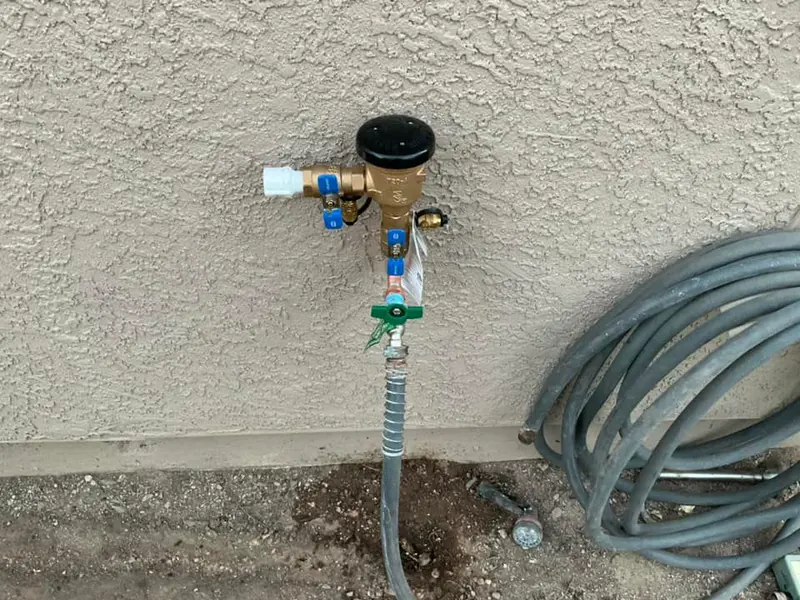
Plumbing code limits the water pressure inside a home to 80 psi. The Town of Cave Creek's water department puts it simply: if a gauge reads above 80 psi, you need a pressure regulator valve (PRV), or your existing one checked by a licensed plumber.
Water mains often run at higher pressure than a house can handle, so most homes have a PRV where the water line enters the house. It brings the street pressure down to a safe level. Like any valve, it wears out over time, and when it fails, the full street pressure comes straight into your pipes.
Signs your pressure is too high
- Banging or knocking pipes when a toilet fills or a faucet shuts off quickly (called water hammer).
- Toilets that run or refill on their own.
- Dripping faucets and showerheads, even after you replace the washers.
- Leaks at appliance hoses: the washing machine, dishwasher, fridge or water softener.
- The water heater's relief valve drips or a pipe from it leaks.
- Faucets that spray hard or splash out of the sink.
- Appliances and fixtures that wear out early. High pressure erodes washers and seals, causes leaks in pipes, and adds wear to appliances.
Test it yourself in 5 minutes
- Buy a water pressure gauge that threads onto a garden hose spigot. Hardware stores carry them.
- Turn off every faucet, sprinkler and appliance using water inside and outside the house.
- Screw the gauge onto the spigot closest to where the water comes into the house and turn the spigot on all the way.
- Read the gauge. Above 80 psi is too high.
Check again at night or early in the morning, when demand on the city system is low. Pressure can climb then, so a reading that looked fine at noon may not be fine at 2 a.m.
Pressure that creeps up: thermal expansion
When a tank water heater heats water, the water expands. If a PRV or a check valve stops that extra water from pushing back to the street, the pressure has nowhere to go but your pipes. That's why the plumbing code calls for an expansion tank on the water heater's cold supply in that kind of closed system. If your gauge shows pressure rising after the water heater runs, a missing or failed expansion tank is a likely cause.
When to call a plumber
- Your gauge reads over 80 psi.
- You hear banging pipes, or have two or more of the signs above.
- Your water heater's relief valve is dripping.
- Your PRV is old, leaking or rusted, or you can't find one at all.
A licensed plumber can test the pressure, adjust or replace the PRV, and check the expansion tank. OX Plumbing is licensed in Arizona (ROC #347174) and answers 24/7. Leaks from high pressure can show up as slab leaks or hidden leaks in walls, so it pays to catch them early. Pressure too low instead? See low water pressure in your house.