

That small tank on the pipe next to your water heater isn't a spare. It's an expansion tank, and in many homes the plumbing code requires one.
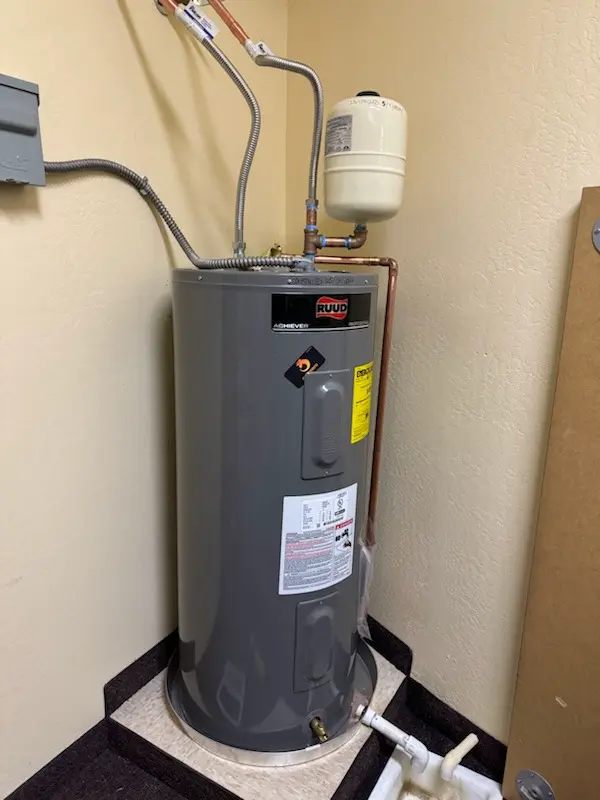
What does it do?
Water expands when it's heated. Every time a tank water heater heats up, that extra water has to go somewhere.
In an older setup it could push back out into the city main. But most homes now have a pressure reducing valve (PRV) or a check valve on the water line, and those stop water from flowing back. The house becomes a closed system: the extra water has nowhere to go, so the pressure in your pipes spikes every time the heater runs.
An expansion tank gives that water a place to go. Inside is a rubber bladder with air on one side. As the water expands, it squeezes the air, and the pressure stays steady.
Do you need one?
The plumbing code says that when a storage (tank) water heater is fed through a check valve, pressure reducing valve or backflow preventer, a thermal expansion device must be installed on the cold supply. In practice:
- You have a PRV or check valve and a tank water heater: you almost certainly need one.
- You have a tankless water heater: usually not, unless it's on a closed recirculation loop, because there's no stored water to expand.
- You're replacing a tank water heater: the plumber should check whether your system is closed and add a tank if it is.
Signs the expansion tank has failed
- The water heater's relief valve drips, especially right after the heater runs.
- Water pressure jumps after the heater runs. A hose spigot gauge that reads higher with hot water in the tank is a clue.
- Tap test: with the tank in place, tap the top and the bottom. The top (air side) should sound hollow. If the whole tank sounds solid, it may be full of water.
- Water from the air valve. The tank has a valve like a tire valve. If you press the pin and water comes out instead of air, the bladder has failed and the tank needs replacing.
Getting it right
- The tank's air charge should be set to match your home's water pressure before it's installed. A tank set wrong can't do its job.
- A full expansion tank is heavy. Manufacturers call for it to be supported, not just hanging on the pipe.
- If your pressure is too high to begin with, fix that first. See high water pressure: signs and when to get it checked.
Why it matters
Pressure that spikes every time the heater runs wears out faucets, toilet valves, appliance hoses and the water heater itself, and can open the relief valve. An expansion tank is a small part that protects much bigger ones.
Not sure whether you have one, or whether yours still works? OX Plumbing can check it with the rest of your water heater, and we answer 24/7.