

When a water heater needs replacing, the first question is whether to replace it with the same kind or switch to tankless. Both work well. They just fit different homes.
How they work
- Tank water heater: keeps a tank of water (often 40 or 50 gallons) hot all the time, ready to use. When you use it up, you wait while the tank heats again.
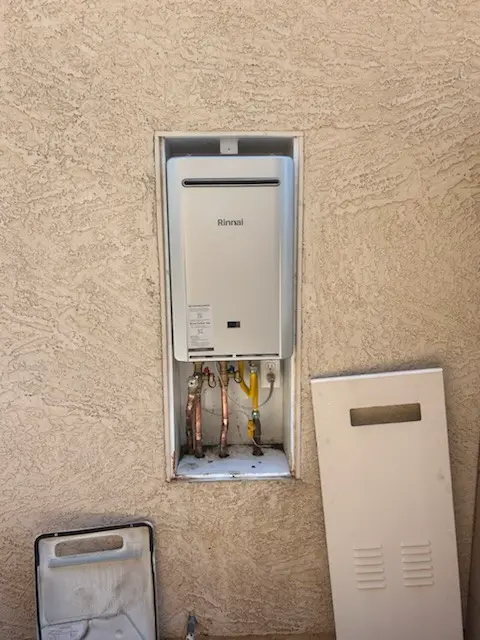
- Tankless water heater: has no tank. When you open a hot faucet, water runs through a heat exchanger and heats up on the spot, for as long as the faucet is open.
What a tank does well
- Lower cost up front, and usually a simpler swap if you're replacing a tank with a tank.
- Handles several hot taps at once well, until the tank runs out.
- Familiar and easy to service.
Trade-offs: it keeps heating water you aren't using, it takes floor space, and once the hot water runs out, you wait.
What tankless does well
- Hot water that doesn't run out. Back-to-back showers, a full tub, laundry: it keeps going.
- Only heats water when you use it, instead of keeping a tank hot around the clock.
- Saves space. It mounts on a wall, inside or out.
- Lasts longer. Tankless heaters generally outlast tank heaters.
Trade-offs: it costs more up front, a switch from a tank may need a bigger gas line, new venting or electrical work, and there's a limit on how much hot water it makes at once (gallons per minute). Run three showers and the dishwasher together and a unit that's too small can't keep up, so sizing matters.
Hard water matters here
Valley water is hard. In a tank, minerals settle as sediment; in a tankless unit, they build up as scale inside the heat exchanger. Either way, regular maintenance keeps it working:
- Tank: flush the sediment out.
- Tankless: flush (descale) it on a schedule.
A water softener or salt-free conditioner in front of the heater helps both kinds. If you go tankless, check the manufacturer's water quality requirements to protect the warranty.
Which one fits you?
A tank may fit better if you want the lowest cost now, your current tank setup works for your family, or your gas line and venting would need major work for tankless.
Tankless may fit better if you run out of hot water now, you want the space back, you plan to stay in the home for years, or you want a heater that lasts longer.
Getting the size right
For a tank, size is gallons. For tankless, it's flow: how many fixtures you run at once and how cold the incoming water is. A plumber should look at your household's peak use, your gas line or electrical panel, and venting before recommending one.
OX Plumbing installs and repairs tank and tankless water heaters, gas and electric, including Rinnai and Navien tankless units. See water heater service or call us 24/7.