

A puddle around the water heater is one of the most common calls a plumber gets. Some leaks are a five-minute fix. Others mean the tank is done. Here's how to tell, and how to stay safe while you find out.
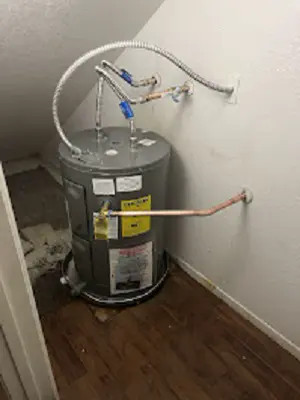
First: make it safe
- Turn off the cold water going into the heater. It's the valve on the pipe at the top of the tank (or on the cold line coming down from the wall).
- Turn off the energy. Gas: turn the control knob to "Pilot" or "Off". Electric: switch off the water heater's breaker.
- Don't touch the tank, the pipes on top or the relief valve. The water inside can be scalding.
- Move boxes and anything else that can soak up water, and put down towels or a shallow pan.
More on shutoff valves: how to shut off your water in a plumbing emergency.
Then find where it's coming from
Dry everything off and look for where the water appears first.
Leaking from the top
- The pipe connections on top of the tank (cold in, hot out). Fittings can loosen or corrode. Often repairable.
- The temperature and pressure (T&P) relief valve on the side or top, with a pipe running down. If water is coming out of that pipe, the valve is doing its job: letting out water because the pressure or temperature is too high. Don't cap it or plug it. The cause needs to be found, often high water pressure or a missing or failed expansion tank.
Leaking from the bottom
- The drain valve near the bottom of the tank can drip if it isn't closed tight or its washer is worn. Usually repairable.
- Water running down from the top. A leak at the top can run down the side and pool at the base, so check above before you assume the worst.
- Condensation. A gas heater filling with cold water can "sweat" a little when it first fires up. If it stops once the tank is hot, it's not a leak.
- The tank itself. If water is coming from the bottom of the tank and none of the above explains it, the inside of the tank has most likely rusted through. A leaking tank can't be repaired; the heater needs to be replaced.
Repair or replace?
Repairable: loose or corroded fittings, a dripping drain valve, a T&P valve that's worn out, or a pressure problem behind the relief valve.
Time to replace: a leak from the tank body, rusty water from the hot side, or a heater that's near the end of its life. The U.S. Department of Energy says most tank heaters last 10 to 15 years, and hard water like ours in the Valley can shorten that. The manufacture date is usually coded into the serial number on the label.
If you're replacing anyway, it's a good time to ask about tankless: it saves space and only heats water when you use it.
Call a plumber when
- The leak is from the tank body, or you can't tell where it's coming from.
- The relief valve keeps discharging.
- You smell gas near a gas water heater: leave the house and call your gas company from outside.
OX Plumbing repairs and replaces tank and tankless water heaters, gas and electric, and answers 24/7. See water heater service or call us.