

A tankless water heater has no tank to collect sediment, but it still needs maintenance. Water runs through a small heat exchanger, and in hard water, minerals stick to it as scale. Scale insulates the exchanger, so the heater works harder, and enough of it restricts the flow.
Why it matters in the Valley
Hard water is water with a lot of dissolved calcium and magnesium. The USGS explains that's what forms the scale on kettles, fixtures and inside heaters. East Valley water is hard, which is why Valley homes see scale on faucets and showerheads, and why tankless heaters here need more attention than in soft-water areas.
How often?
There's no single schedule; it depends on how hard the water is and how much hot water you use.
- Most pros recommend once a year, Noritz says, and homes with hard water may need it more often.
- Noritz also notes that in very hard water, yearly service is about right, while homes with soft water might go four to five years.
- Many newer units tell you. Some Noritz models have scale detection that shows a service error, and Rinnai offers units with programmable service reminders. If your heater shows a maintenance code, check the manual before resetting it.
- A water softener or anti-scale system in front of the heater slows scale down a lot. See water softener vs. salt-free conditioner.
Signs it's due
- Hot water takes longer to get hot, or isn't as hot as it used to be
- Hot water flow drops, especially at more than one faucet at a time
- The heater shows a service or scale code
- The heater shuts off or runs hot and cold during a shower
(Low flow everywhere, hot and cold, is a different problem; see low water pressure.)
How the flush works
A flush circulates a descaling solution through the heat exchanger and back to a bucket, then rinses it out:
- Power and gas are turned off, following the manual's order.
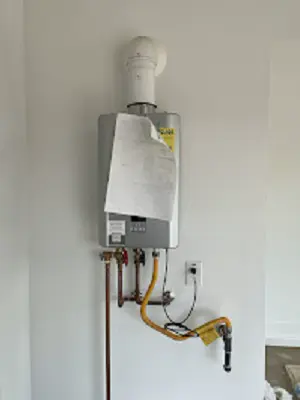
- The water is shut off at the isolation valves under the heater. These are the valves with small hose ports; most installs have them.
- Hoses go from the ports to a small submersible pump sitting in a bucket of solution.
- The solution circulates. Noritz recommends about 60 minutes with white vinegar.
- The heater is rinsed with clean water, the inlet filter screen is cleaned, and everything is turned back on and checked for leaks.
Avoid harsh descalers. Noritz warns that CLR-type products can be harsh on the copper heat exchanger. Use what your heater's manual names.
DIY or a plumber?
It's a common DIY job if your heater has isolation valves with hose ports and you're comfortable with gas and electrical shutoffs. Call a plumber when:
- There are no isolation valves. They have to be plumbed in first, and once they're there, every future flush is easier.
- The heater shows an error that doesn't clear after a flush
- You see water or rust at the fittings, or smell gas (leave the house and call the gas company first)
- You'd rather it's done along with a check of the venting, gas line and pressure relief valve
OX Plumbing installs and services tankless water heaters across the East Valley and answers 24/7. If you're still deciding whether tankless is right for you, see tank vs. tankless. Our $99 service call covers the visit, the diagnosis and an upfront price.