

Most of the year, East Valley plumbing fights heat, not cold. But a few nights each winter dip to freezing, and those are the nights we get calls about split hose bibs, cracked backflow preventers and pool lines that won't run. Homes here are built for heat, so a lot of the plumbing sits outside, out in the open.
Here's what freezes first, what to do before a cold night, and what to do if a pipe already froze.
When to pay attention
The National Weather Service office in Phoenix issues a Freeze Warning when temperatures of 32°F or lower are expected in the Valley's populated areas. That's your cue. Clear, calm nights are the coldest, and the coldest part of the night is usually just before sunrise.
What freezes first in an East Valley home
The American Red Cross lists pipes exposed to cold as the ones that freeze most often: outdoor hose bibs, pool supply lines and sprinkler lines, plus pipes in unheated spaces like garages and pipes along outside walls. Around here, that means:
- Hose bibs (outdoor faucets), especially the one by the front of the house near the main shutoff.
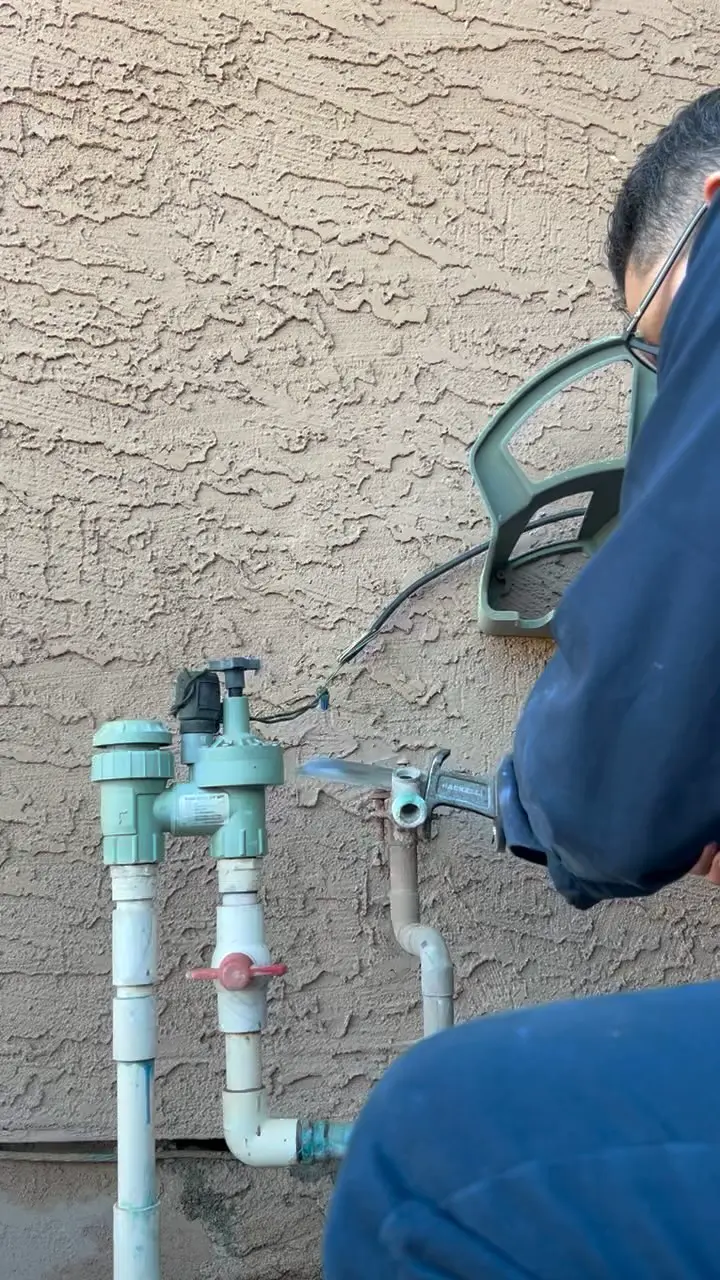
- The irrigation backflow preventer, the brass valve assembly that sticks up out of the ground by the sprinkler lines. It's fully exposed and one of the most common freeze repairs we see.
- Pool equipment and its pipes.
- The main shutoff and pressure regulator if they sit above ground on an outside wall.
- Tankless water heaters mounted outside, and the pipes running to them.
- Evaporative (swamp) cooler water lines on the roof.
- Water softener and filter loops in an unheated garage or on an outside wall.
Before a freeze: a 15-minute checklist
- Disconnect garden hoses. A hose left on traps water in the faucet. The Red Cross says to remove, drain and store hoses used outdoors.
- Cover hose bibs. A foam faucet cover from the hardware store is cheap and works. Old towels and a plastic bag in a pinch.
- Wrap the backflow preventer and exposed pipes. Pipe sleeves, an old blanket or a towel covered with plastic all help. Leave a path for any water to drain.
- Pool: check your equipment's freeze protection. Many pool systems have a freeze mode that runs the pump when it gets cold. Check your equipment manual or ask your pool company. Running water is much harder to freeze.
- Outdoor tankless heater: keep the power on. Many outdoor units protect themselves from freezing, but only while they have power. Check your manual, and wrap the exposed pipes under the unit.
- Swamp cooler: drain it for the winter and shut off its water supply line if you haven't already.
- Open the sink cabinets on outside walls so the warmer house air reaches the pipes, and keep the garage door closed.
- On the coldest nights, let a faucet on an exposed line drip. The Red Cross notes that even a trickle helps prevent freezing.
- Keep the thermostat steady overnight. If you'll be away, the Red Cross says to leave the heat on no lower than 55°F.
If a pipe is frozen
If you turn on a faucet and only a trickle comes out, suspect a frozen pipe.
- Keep that faucet open so water can flow as the ice melts.
- Warm the pipe gently: a hair dryer, a heating pad, or towels soaked in hot water. Never use a torch or any open flame.
- Check your other faucets. If one pipe froze, others may have too.
- If you can't find the frozen spot, can't reach it, or can't thaw it, call a licensed plumber.
If a pipe bursts
A frozen pipe often doesn't leak until it thaws, so a split hose bib or backflow preventer may start spraying mid-morning.
- Shut off the water. See how to shut off your water in an emergency. For an irrigation backflow preventer, there's usually a shutoff right on it or on the line just before it.
- Turn off the water heater if the main is off for a while.
- Take photos and call us.
Many freeze repairs are quick: a new hose bib, a rebuilt or replaced backflow preventer, or a short section of pipe. If water got inside the house, call right away; see emergency plumbing.
OX Plumbing fixes frozen and burst pipes, outdoor faucets and backflow preventers across Mesa, Gilbert, Chandler, Queen Creek and San Tan Valley. We answer 24/7, and our $99 service call covers the visit, the diagnosis and an upfront price before any work begins.
Send Details, Photos, or Questions.
Tell us what you need, send photos if helpful, or request service for a later date. We'll get back to you within 24 hours.
0/1000
Your information is private and only used to contact you. Have an emergency? Please call us directly.