

Tankless Water Heater Repair in the East Valley, AZ
When a tankless water heater stops making hot water, it usually tells you why with an error code. OX Plumbing diagnoses and repairs Rinnai, Navien and Rheem tankless water heaters, gas and electric, across Mesa and the East Valley: ignition failures, scale buildup, gas and venting problems, and temperature swings.
We find the cause first and give you a price before any work starts. Call us with the brand and the code, or see our tankless installation page if it's time for a new one.
Common Tankless Problems
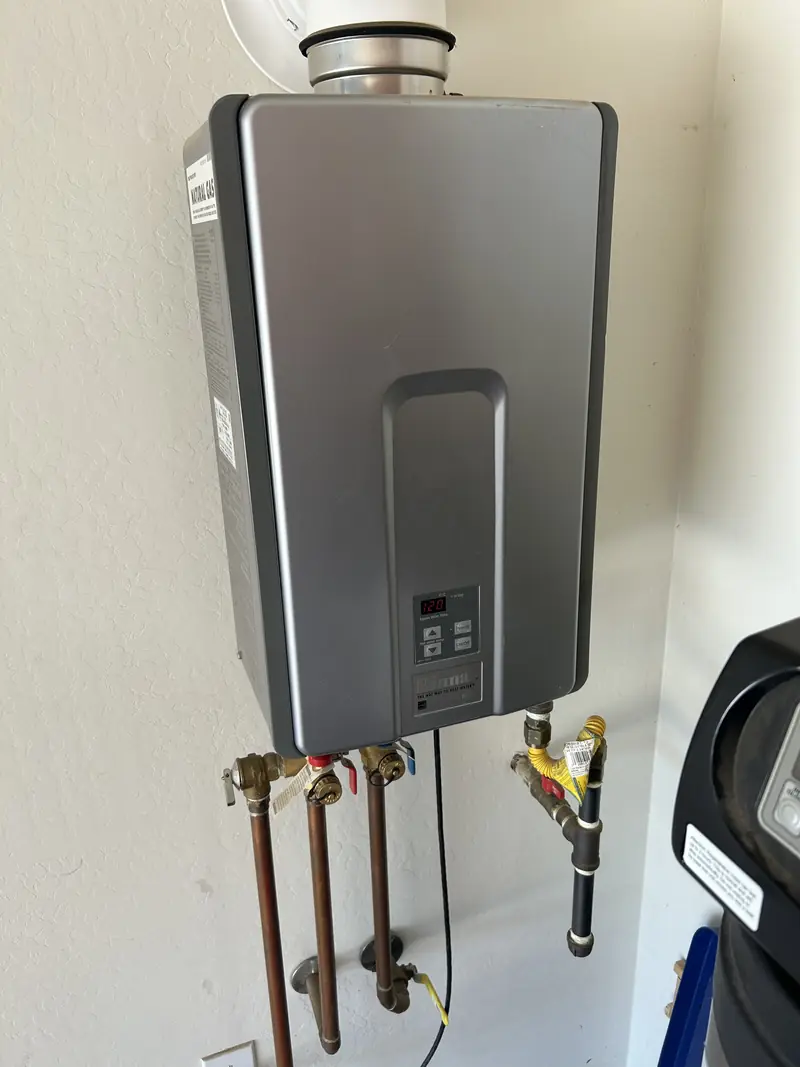
- No hot water: the burner isn't lighting or staying lit. Check that the gas is on, then look at the code on the display.
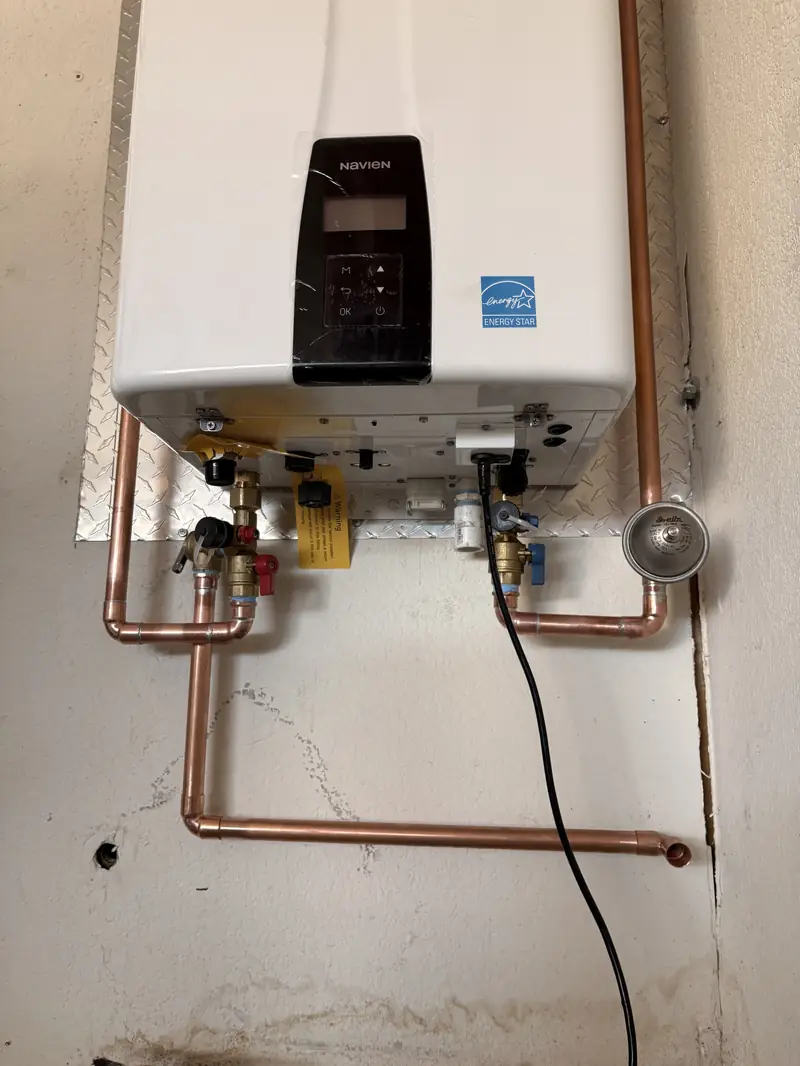
- Error codes: on Rinnai, 11 is no ignition, 12 is flame failure, 10 points to the air supply or exhaust, and LC is a scale warning. On Navien, E003 is ignition failure and E012 is flame loss. Your manual has the full list for your model; our post on Rinnai tankless error codes goes through what you can check yourself.
- Temperature swings or bursts of cold: scale, low flow through a clogged inlet filter, or a sensor that needs checking.
- Leaking: a fitting or service valve can be tightened or replaced; a leaking heat exchanger usually means a new unit.
What We Check and Fix
- Ignition: the igniter and the flame sensor (flame rod), replaced when they've failed.
- Gas supply: a tankless burner needs a lot of gas while it runs. An undersized line starves it; see our gas line services.
- Venting and air intake: blocked or damaged venting shuts the unit down for safety.
- Water side: the inlet filter screen, the flow sensor and the service valves.
One thing we don't do: electrical. If an electric tankless unit has a breaker or wiring problem, an electrician handles that part; we'll tell you if that's what we find.
Descaling and Flushing
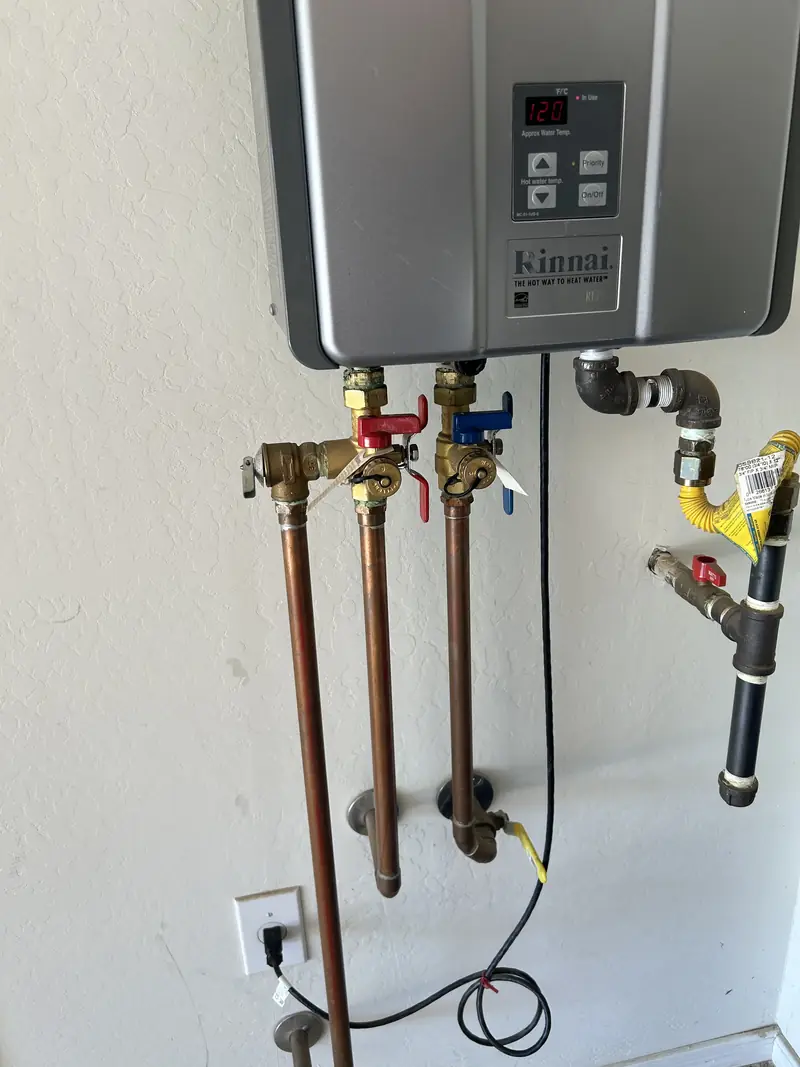
East Valley water is hard, and scale on the heat exchanger is the most common reason a tankless unit loses output, swings in temperature or throws a scale code. A descaling flush circulates a cleaning solution through the heat exchanger through the isolation valves; makers generally call for it about once a year, more often in hard water.
Do it yourself with our guide to flushing a tankless water heater, or have us do it. A water softener helps protect the heater between flushes. For tank water heaters, see water heater repair.