


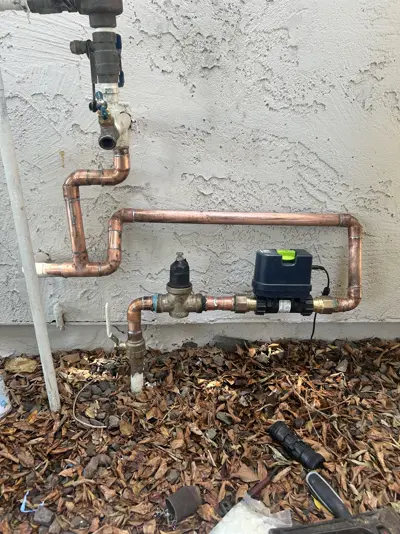




Most Leaks Aren't a Flood. They're a Slow Bill.

The EPA's WaterSense program estimates the average household's leaks can waste more than 9,300 gallons a year, and about 1 in 11 homes has leaks wasting 50 gallons or more every day.
The usual culprits are small: a worn toilet flapper, a dripping faucet, a leaking valve. The expensive ones are the leaks you can't see, inside a wall, above a ceiling, in the yard line, or under the slab, because they do damage the whole time they run.
0+
Homes Served across Mesa & East Valley
0+
Commercial Jobs — restaurants, offices, retail
0+
Years Experience — licensed & insured
Where Leaks Hide in a Mesa Home

The places we check, and the signs that point to each:
- The yard line between the meter and the house. A soggy patch, greener grass in one strip, or a sinking spot can all point here. The City of Mesa says that pipe belongs to the homeowner.
- Inside walls: soft or stained drywall, peeling paint or baseboards that swell, often behind a shower valve or toilet supply.
- Ceilings: a brown ring under an upstairs bathroom or below a water heater in the attic.
- Under sinks and at appliances: supply lines, angle stops, dishwasher and ice maker lines, water heater fittings.
- Under the slab: a warm spot on the floor or running water with everything off. See slab leak repair in Mesa.
If water is coming up from the meter box or the street, that is the city's. Mesa asks residents to call 480-644-2221.
How We Pinpoint It
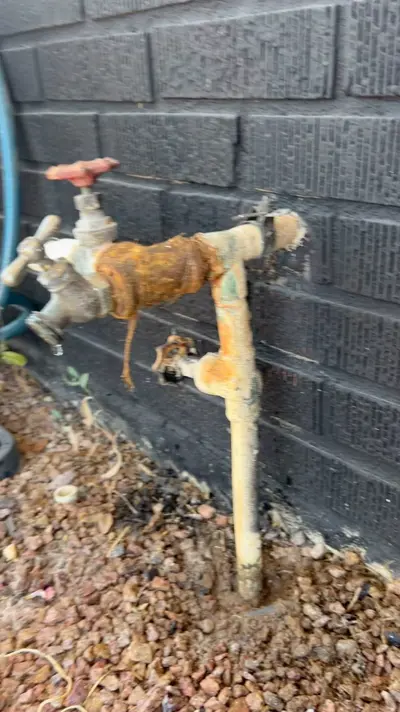
We start where the evidence is: the meter, the bill history, and every fixture and line that could be the source. Then we narrow it down by isolating sections of the plumbing before anything is cut open.
Once it is found, you get an upfront price for the fix. That might be a supply line, a valve, a section of pipe in a wall, a new yard line, or a reroute. Our $99 service call covers the visit and diagnosis, and it goes toward the repair if you go ahead. More on leak detection and repair.