

What does a plumber's day actually look like? This one is put together from real OX Plumbing jobs. The problems, the steps and the fixes come straight from our technicians' job notes. The times are approximate, and the customers stay private.
Morning window: 8 AM to noon
Job 1: The leaking water heater
The call: water around the base of the tank. On arrival, the tech finds the old heater swollen and cracked at the bottom. That kind of leak can't be repaired, so the homeowner chooses a replacement.
How the swap goes:
- Shut off the water and the gas, then drain the old tank.
- Disconnect the water lines, the relief valve (T&P) line, the vent and the gas line.
- Solder on a new ball valve and new water lines.
- Set the new heater in place and reconnect everything.
- Fill the tank completely before lighting the pilot, so the heater never fires empty.
- Check every connection for leaks, and confirm hot water at the tap.
If your tank is leaking from the body itself, see water heater leaking from the bottom.
Job 2: Banging pipes
The call: loud banging in the walls. The tech puts a pressure gauge on the system and has the homeowner flush a toilet. The needle stutters and the pipes bang right on cue: the pressure reducing valve (PRV) has failed. A new PRV goes in, and the banging stops.
While there, the homeowner mentions weak pressure in the master shower. Instead of guessing, the tech screws on a test showerhead from the truck. Normal pressure, so the problem is the shower's fixture, not the pipes. That's how you avoid fixing the wrong thing. More on pressure in high water pressure signs.
Afternoon window: noon to 4 PM
Job 3: A restaurant backup
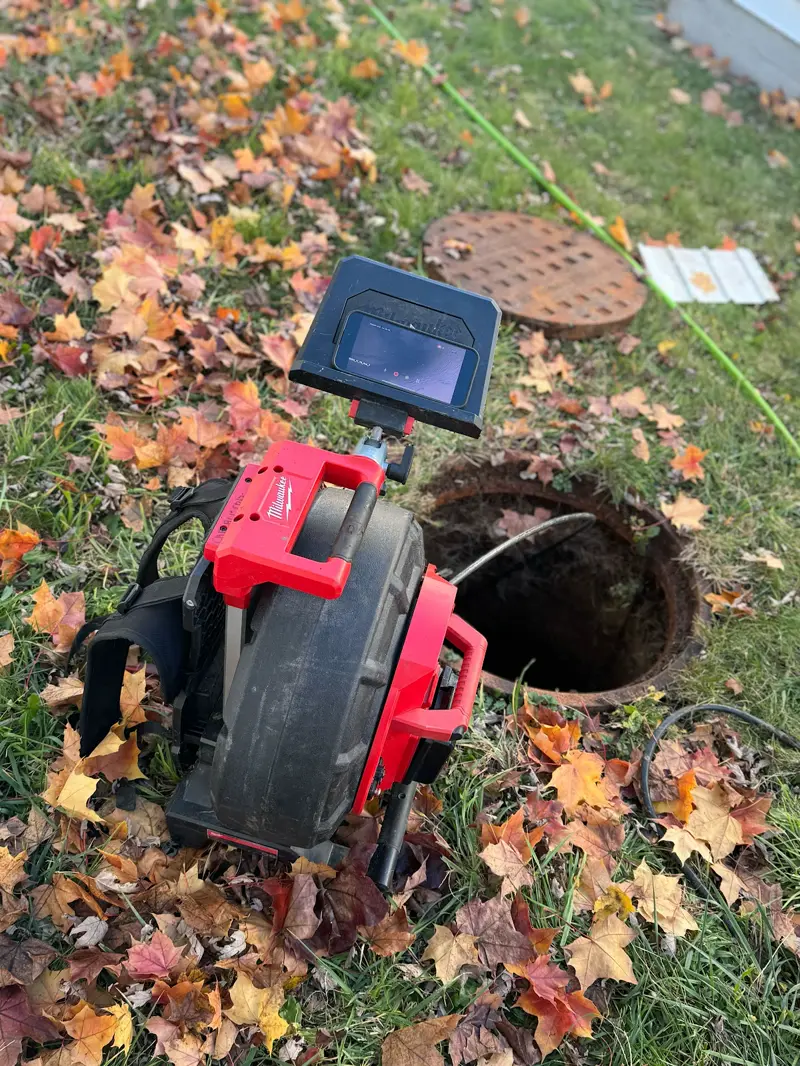
The call: drains backing up at a restaurant. The cleanouts behind the building are full of water. The tech runs a snake about 220 feet into the line until the blockage breaks, then follows with the hydro jetter to scour the debris off the pipe walls. The camera goes in last. It shows a belly (a low spot where the pipe sags and holds water), which explains why this line keeps backing up. The area gets cleaned and the cleanout caps go back on. See hydro jetting.
Job 4: A water softener install
The house already has a softener loop. The tech opens the loop, sets the new softener, connects the brine tank and runs the discharge line to the laundry drain. Then the softener goes through a regeneration cycle to test every connection for leaks. A hardness test at the hose bib reads about 10 grains per gallon, so the softener is set to match, and a follow-up test is scheduled a month out to make sure the water is really soft. See water treatment.
After hours
Job 5: The ceiling leak that wasn't plumbing
The call: a wet spot spreading across a ceiling. The tech pressure-tests the whole house for ten minutes. It holds, so no supply pipe is leaking. A moisture meter finds no water at the baseboards upstairs. Then, through the upstairs window, the tech spots broken roof tiles right above the wet ceiling. Not a plumbing problem, and the homeowner hears that straight, with a referral for the roof and the drying.
What ties the day together
- Water off first, every time.
- Test before leaving: pressure tests, fill tests, a full regeneration cycle, a final look for leaks.
- Prove it before replacing it: a gauge, a test showerhead, a camera, a moisture meter.
- Explain what was found in plain words, including when it isn't plumbing.
We answer 24/7, and our $99 service call covers the visit, the diagnosis and an upfront price. Think you'd like this job? See our Careers page.
Send Details, Photos, or Questions.
Tell us what you need, send photos if helpful, or request service for a later date. We'll get back to you within 24 hours.
0/1000
Your information is private and only used to contact you. Have an emergency? Please call us directly.